
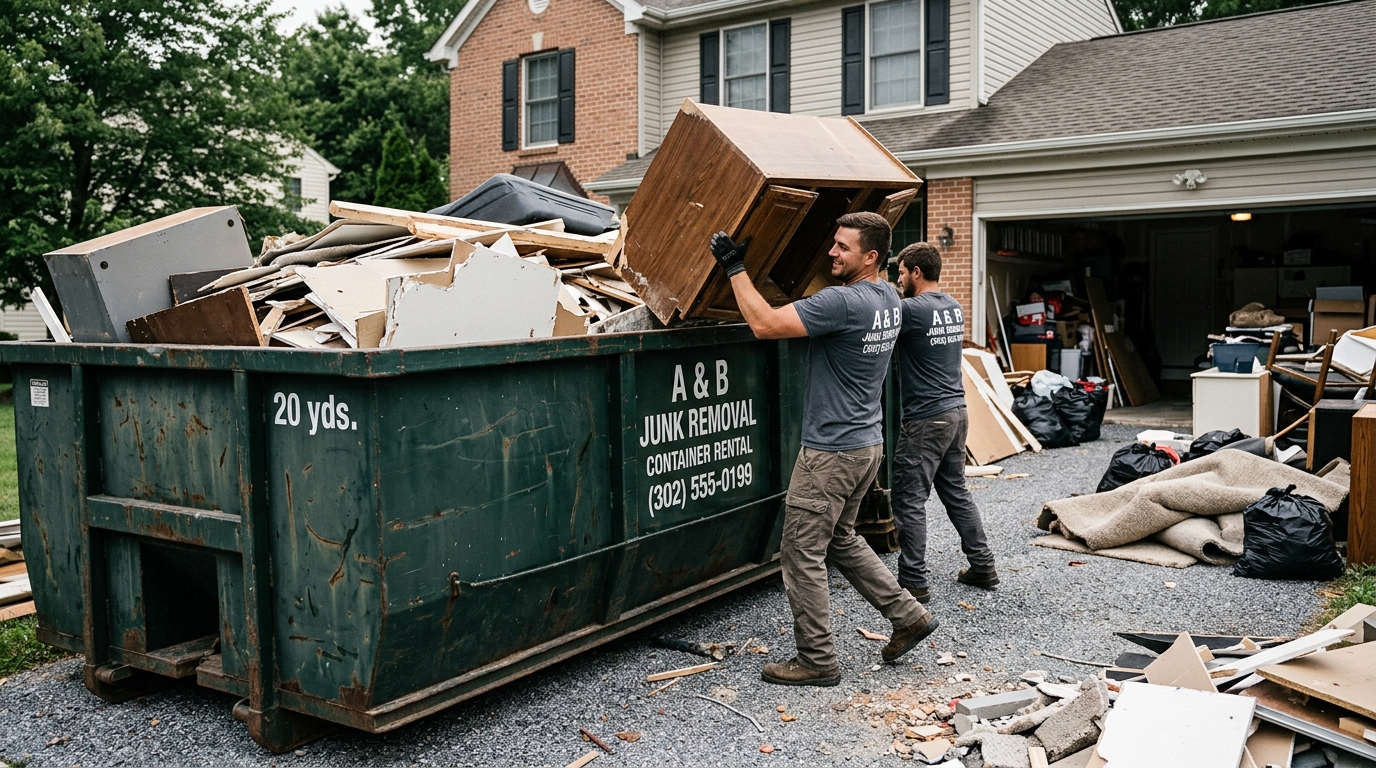
Choosing the Right Dumpster Size for Home Renovation Projects
Embarking on a home improvement journey is an exciting milestone for any homeowner, but the logistical reality of managing debris can quickly become overwhelming. Whether you are tearing out a dated kitchen or gutting a bathroom, the volume of waste generated often exceeds the capacity of standard trash collection. This is where choosing the right dumpster size for home renovation projects becomes the most critical decision in your project management workflow. At A & B Junk Removal, we have witnessed firsthand how an incorrectly sized dumpster can lead to project delays, safety hazards, and unnecessary expenses. In this comprehensive guide, we provide the expert insights you need to navigate the complexities of waste management and ensure your renovation remains on track and under budget.
The Financial and Practical Impact of Proper Sizing
Many homeowners make the mistake of either underestimating their waste production or overcompensating by renting the largest container available. Neither is ideal. Choosing a dumpster that is too small results in a "swap-out" fee, where the rental company must haul away the full container and deliver a fresh one—essentially doubling your transportation costs. Conversely, renting a container that is far too large means you are paying for empty air and potentially taking up valuable space on your driveway or street that could be used for contractor vehicles or material staging.
According to industry data, nearly 30% of residential dumpster rentals require an unscheduled secondary haul due to poor initial sizing. At A & B Junk Removal, our goal is to help you hit the "Goldilocks" zone: a dumpster that is large enough to contain all your debris in a single trip, but compact enough to fit your budget and property constraints.
Understanding Dumpster Dimensions: A Comparative Guide
Dumpsters are measured in cubic yards, which represents the volume of waste they can hold. One cubic yard is roughly the size of a standard kitchen stove or a large washing machine. Understanding these visual metaphors is key to choosing the right dumpster size for home renovation projects.
| Dumpster Size | Dimensions (Approx.) | Capacity (Pickup Truck Loads) | Best Use Case |
|---|---|---|---|
| 10-Yard | 12' L x 8' W x 3.5' H | 3 to 4 Loads | Small bathroom, heavy debris (dirt/concrete) |
| 15-Yard | 14' L x 8' W x 4' H | 4.5 to 6 Loads | Medium kitchen, deck removal, attic cleanout |
| 20-Yard | 22' L x 8' W x 4.5' H | 8 to 10 Loads | Whole home flooring, large deck, roofing projects |
| 30-Yard | 22' L x 8' W x 6' H | 12 to 15 Loads | Home additions, whole-house gutting, estate cleanouts |
The 10-Yard Dumpster: The Compact Workhorse
The 10-yard container is the favorite for small-scale renovations and heavy-material disposal. If your project involves "inert" materials like concrete, brick, or dirt, this is often the only size allowed due to the weight limits of the hydraulic lifts on delivery trucks. A 10-yard dumpster can hold approximately 50-70 square feet of masonry or a small bathroom remodel debris (including the tub, vanity, and toilet).
The 15-Yard Dumpster: The Versatile Middle Ground
For many suburban homeowners, the 15-yard dumpster offers the perfect balance. It fits comfortably in most driveways while providing enough depth for bulkier items like cabinets and small furniture. This size is ideal for a standard kitchen remodel or a basement cleanout where you are disposing of both construction materials and old household goods.
The 20-Yard Dumpster: The Industry Standard
If you are tackling a large-scale renovation, the 20-yard dumpster is frequently the go-to choice. It is long enough to handle 8-foot pieces of lumber and drywall without them sticking out over the top. It is the gold standard for roofing replacements, typically holding up to 30 squares (3,000 sq. ft.) of asphalt shingles.
Project-Specific Sizing Strategies
When choosing the right dumpster size for home renovation projects, you must look beyond the square footage and consider the *density* of the materials. Below are the recommendations from the A & B Junk Removal expert team based on years of local project experience.
Bathroom Remodel (50–100 Sq. Ft.)
Bathroom waste is heavy but generally low-volume. Tiles, mortar, and cast-iron tubs take up less space but weigh significantly more than drywall.
- Recommended Size: 10-Yard or 15-Yard.
- Pro-Tip: If you have a cast-iron tub, ensure you place it in the center of the dumpster to keep the load balanced for the haul-away truck.
Kitchen Remodel (Moderate to Large)
Kitchens generate a mix of bulky cabinets, appliances, and heavy countertops. The demolition of a medium-sized kitchen usually fills a 15-yard dumpster to the brim. If you are also replacing flooring or removing a wall, you should upgrade to a 20-yard container.
Whole-House Flooring Replacement
Removing carpet and padding is deceptively high-volume because rolls of carpet do not compress well. If you are removing hardwood or tile from an entire 2,000-square-foot home, the weight and volume will almost certainly require a 20-yard dumpster.
Deck Removal
Pressure-treated wood is bulky and doesn't stack neatly. For a standard 10x12 deck, a 15-yard dumpster is sufficient. For larger multi-level decks, a 20-yard or 30-yard dumpster will prevent the need for multiple trips. [Link to our Dumpster Rental Services for current rates].
Our Methodology: The "Stack and Estimate" Framework
To assist our clients in choosing the right dumpster size for home renovation projects, we developed a simple estimation framework. Follow these steps before booking your rental:
- List the Big Items: Identify the largest non-crushable items (bathtubs, sofas, appliances).
- Calculate the Square Footage: For flooring or drywall, multiply the area by the thickness to get a rough cubic volume.
- Factor in the 'Fluff' Ratio: Construction debris is rarely packed tight. Add a 20% buffer to your volume estimate to account for air pockets and irregular shapes.
- Weight Check: If you are disposing of concrete, brick, or shingles, consult with us regarding weight limits. Exceeding weight limits can result in significant overage fees from the landfill.
Common Pitfalls to Avoid
The Overfill Trap
It is tempting to pile debris high above the rim of the dumpster. However, this is a major safety violation. By law, roll-off containers must be covered with a tarp during transport. If items are protruding, our drivers cannot safely secure the load, and we will be unable to pick up the dumpster until the excess is removed. This leads to "dry run" fees and project delays.
Weight Limit vs. Volume
A 20-yard dumpster has a much higher volume than a 10-yard, but that doesn't mean you can fill it with 20 yards of concrete. Most municipalities and hauling companies have strict weight limits (usually 2 to 4 tons for residential units). Always disclose the types of materials you are disposing of so A & B Junk Removal can advise on the weight capacity of your specific unit.
Permits and Placement: Local Considerations
Before the dumpster arrives, you must determine where it will sit. If the dumpster is placed on your private driveway, you generally do not need a permit. However, if the unit must be placed on a public street, your local municipality may require a right-of-way permit. [Link to Residential Junk Removal page for more on property prep].
At A & B Junk Removal, we recommend placing the dumpster on a flat, hard surface. To protect your driveway from potential scratches or cracking, we suggest laying down plywood boards for the dumpster's steel rollers to rest upon.
Frequently Asked Questions About Dumpster Sizing
What happens if I choose a dumpster that is too small?
If your dumpster fills up before the project is done, you will need to schedule a "swap-out." We will haul the full container away and bring a new one. While this keeps your project moving, it does involve a second rental fee and haul charge.
Can I change my dumpster size after I order?
As long as the dumpster has not yet been dispatched for delivery, A & B Junk Removal can typically adjust your order. We recommend finalizing your choice at least 24 hours before the scheduled delivery time.
What materials are not allowed in the dumpster?
Hazardous materials such as wet paint, batteries, tires, asbestos, and chemicals are strictly prohibited. These items require specialized disposal methods. If you are unsure about a specific item, please call our team for clarification.
Does the rental price include weight?
Our quotes typically include a set weight allowance based on the size of the dumpster. If the weight of your debris exceeds this allowance, a prorated per-ton fee is applied based on the local landfill's rates.
Conclusion: Partner with A & B Junk Removal for Your Next Project
Choosing the right dumpster size for home renovation projects doesn't have to be a guessing game. By understanding the volume of your debris, the weight of your materials, and the specific needs of your renovation, you can save time, money, and stress. As a local leader in waste management, A & B Junk Removal is dedicated to providing transparent pricing, reliable delivery, and expert advice to our neighbors.
Don't let waste management become a bottleneck in your home improvement journey. Whether you're planning a minor update or a major structural overhaul, our team is ready to help you select the perfect container for the job. Contact us today to discuss your project and get a custom quote.
Ready to clear the clutter? Visit A & B Junk Removal to book your dumpster rental online or call our local team for expert sizing assistance!