Items You Cannot Put in a Rental Dumpster: A Complete Guide
Understanding Waste Compliance: What You Need to Know Before Loading Your Dumpster
Renting a dumpster is often the most efficient way to handle a major home renovation, a commercial cleanout, or a landscaping project. However, many homeowners and contractors are surprised to learn that a dumpster is not a "catch-all" for every piece of debris. To maintain safety standards, adhere to environmental regulations, and avoid costly disposal fees, it is critical to understand the specific items you cannot put in a rental dumpster. At A & B Junk Removal, we believe that informed customers are the key to a smooth and successful waste management process.
Whether you are tackling a residential basement purge or managing a large-scale construction site, local and federal laws dictate what can and cannot enter our landfills. Improper disposal doesn't just result in fines—it can lead to environmental contamination and serious safety hazards for the crews handling the waste. In this comprehensive guide, we will break down the prohibited items, explain the logic behind these restrictions, and offer actionable solutions for disposing of difficult materials.
The Primary Categories of Prohibited Items
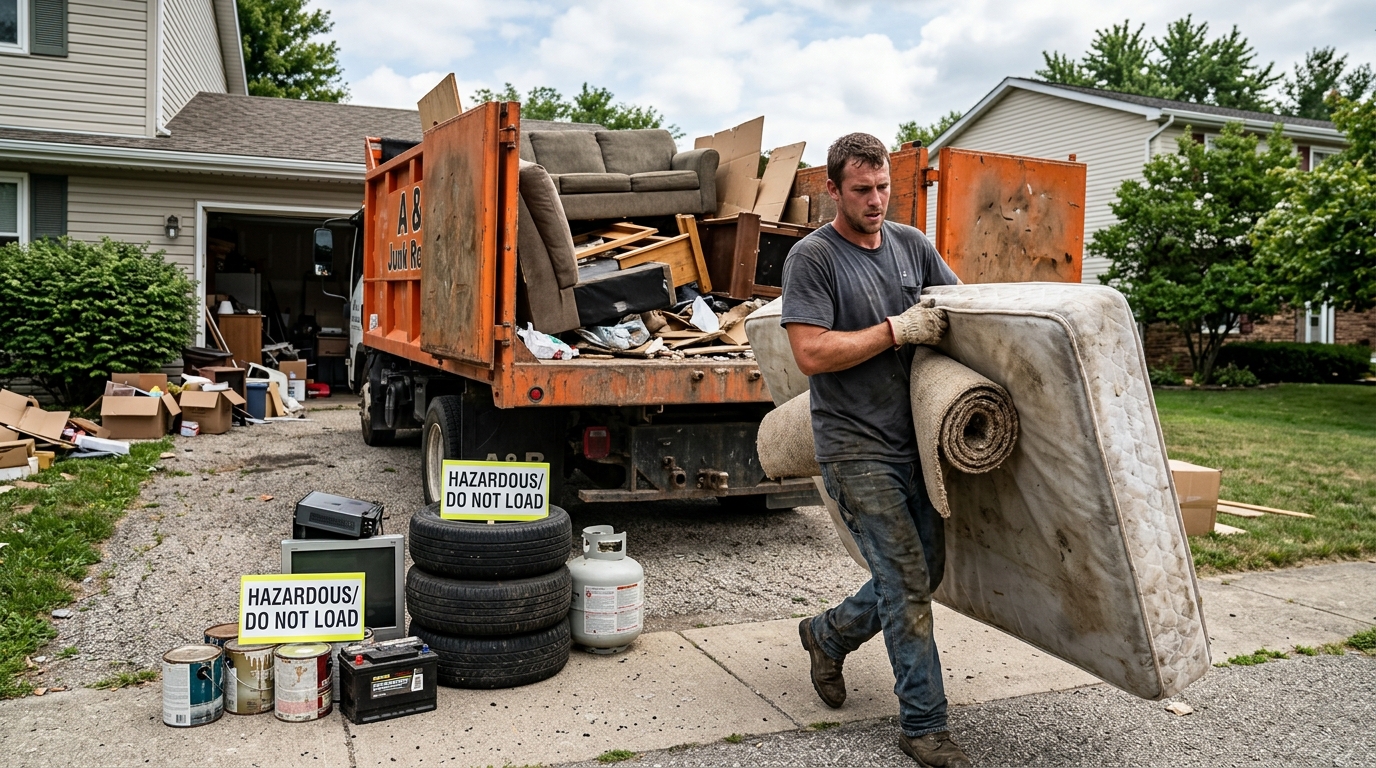
Landfills and transfer stations have strict guidelines designed to prevent hazardous reactions, soil contamination, and equipment damage. If these items are discovered in a dumpster, the rental company often has to reject the load or pay significant remediation fees, which are then passed on to the customer. Below are the most common items you cannot put in a rental dumpster, categorized by the type of risk they pose.
1. Hazardous Household Waste (HHW)
This is the broadest category and the one most frequently responsible for compliance issues. Hazardous household waste includes any substance that is corrosive, toxic, flammable, or reactive. When these items are compressed in the back of a garbage truck or sit in a dumpster under the sun, they can leak or ignite.
- Wet Paint and Solvents: While dried latex paint is often acceptable (if solidified with kitty litter or sawdust), wet paint, thinners, and lacquers are strictly prohibited. They can leak during transport and stain roadways or contaminate other recyclable materials.
- Cleaning Chemicals: Concentrated cleaners, bleach, and ammonia should never be tossed into a dumpster. When mixed, these can create toxic gases.
- Pesticides and Fertilizers: These contain chemicals that can leach into groundwater systems if not processed through specialized hazardous waste facilities.
2. Flammable and Explosive Materials
Safety is the number one priority in the waste management industry. Materials that pose an immediate risk of fire or explosion are the most dangerous items you cannot put in a rental dumpster.
- Propane Tanks: Even if they feel empty, propane tanks often contain residual vapors. Under the pressure of other debris, these tanks can explode. This applies to oxygen tanks and fire extinguishers as well.
- Gasoline, Oil, and Fuel: Any petroleum-based product is a high-level fire hazard and an environmental pollutant. This includes lawnmower fuel and old kerosene.
- Batteries: While standard AA batteries are sometimes debated, Lithium-ion batteries (found in laptops and power tools) and Lead-acid batteries (car batteries) are strictly forbidden. They are a leading cause of fires in waste processing facilities.
3. Specialized Items and Environmental Hazards
Some items are prohibited not because they are immediately dangerous, but because they require specialized recycling processes that landfills are not equipped to handle.
- Tires: Most landfills do not accept whole tires because they can trap methane gas and "float" to the surface of the landfill, damaging the protective liners.
- Refrigerants (Freon): Refrigerators, freezers, and air conditioning units contain Freon (refrigerant). Federal law requires that this gas be professionally recovered before the metal casing can be disposed of.
- Asbestos: Often found in older shingles, ceiling tiles, and insulation, asbestos is a highly regulated carcinogen. It requires a specialized abatement team for removal and cannot be placed in a standard roll-off dumpster.
Quick Reference: Prohibited vs. Restricted Items
Understanding the difference between "strictly prohibited" and "restricted" can save you a headache. Restricted items may be allowed but often incur an extra fee due to the specialized handling required.
| Material Category | Strictly Prohibited | Restricted (Call First) |
|---|---|---|
| Automotive | Oil, Fuel, Antifreeze | Tires, Car Parts |
| Appliances | AC Units, Refrigerators | Microwaves, Dishwashers |
| Electronics | CRT Monitors | TVs, Computers |
| Construction | Asbestos, Lead Pipe | Mattresses, Railroad Ties |
The Real-World Consequences of Improper Disposal
At A & B Junk Removal, we emphasize compliance not just to follow the law, but to protect our local community and the environment. When items you cannot put in a rental dumpster are included in a load, several things happen:
Environmental Leaching
Hazardous liquids can seep through the dumpster and onto your driveway, leaving permanent stains and potentially killing nearby grass or plants. More importantly, once at the landfill, these chemicals can penetrate the soil and contaminate local water tables.
Operational Delays
If our drivers spot prohibited items during the pick-up process, we are legally required to leave the dumpster on-site until the items are removed. This can delay your project and result in "dry run" fees or additional daily rental charges.
Landfill Fines and Surcharges
Landfills use cameras and sensors to monitor incoming loads. If a prohibited item like a propane tank or a load of tires is discovered in a container we tip, the landfill charges us a significant surcharge. These costs are redirected to the customer, often turning a budget-friendly project into an expensive ordeal.
How to Properly Dispose of Prohibited Items
Just because you can't put it in the dumpster doesn't mean you're stuck with it forever. As local experts, we recommend the following frameworks for handling difficult waste.
The "Three-Step Sort" Method
Before your dumpster arrives, we suggest sorting your debris using this methodology:
- Identify Hazards: Separate anything with a "Danger," "Toxic," or "Flammable" label. Set these aside for a local hazardous waste collection day.
- Check for Electronics: Many local municipalities have specific e-waste recycling programs. Items like old tube TVs (CRTs) contain lead and mercury and should be handled separately.
- Evaluate Heavy Debris: If you are disposing of concrete, brick, or dirt, these are generally allowed but have strict weight limits. Overfilling a dumpster with these items can make it impossible for our trucks to lift safely.
Local Resources in Our Service Area
Most counties offer Household Hazardous Waste (HHW) drop-off events. These are often free for residents and are the safest way to dispose of oil-based paints, pesticides, and old gasoline. Check your local municipal website for the yearly schedule. For appliances containing Freon, many utility companies offer rebate programs where they will actually pay you to come pick up and recycle your old refrigerator.
If you find the process of sorting and disposing of these items too overwhelming, [Link to Full-Service Junk Removal] can often be a better alternative. Our full-service teams are trained to identify and handle restricted items appropriately, taking the guesswork out of your cleanout.
Pro-Tips for Optimizing Your Dumpster Rental
To get the most value out of your rental and ensure you don't accidentally include items you cannot put in a rental dumpster, follow these professional tips:
- Dry out your paint: If you have half-full cans of latex paint, leave the lids off or add a paint hardener. Once the paint is completely solid, it is no longer considered hazardous and can be tossed in the dumpster.
- Break down large items: To maximize space, break down furniture and crates. This prevents "voids" in the dumpster and ensures you stay below the fill line.
- Cover your dumpster: If it rains, materials like wood and drywall will soak up water, significantly increasing the weight of your load. Using a tarp can prevent weight-related overage fees.
- Ask before you toss: When in doubt, call us! At A & B Junk Removal, we would much rather answer a quick question over the phone than have to charge a surcharge later.
Frequently Asked Questions
Can I put a mattress in a rental dumpster?
While not universally banned, mattresses are restricted in many areas because they do not compact well and can damage landfill equipment. In many jurisdictions, there is a specific surcharge per mattress. Please let us know if you plan to dispose of mattresses so we can provide accurate pricing.
What should I do with old electronics?
Electronics (E-waste) like computers, printers, and televisions contain heavy metals. Many local retailers offer recycling programs for these items, or you can wait for a local community e-waste drive. We recommend keeping these out of the dumpster to comply with environmental regulations.
Can I put yard waste in the same dumpster as construction debris?
This depends on the local transfer station's rules. Often, "clean" yard waste (branches, leaves) is diverted to a composting facility, while construction debris goes to a landfill. Mixing them may result in the entire load being treated as trash, which is less eco-friendly and potentially more expensive. It is best to [Link to Dumpster Rental FAQ] for specific local guidelines.
Are batteries really that dangerous in a dumpster?
Yes. Lithium-ion batteries, in particular, are prone to "thermal runaway" when crushed. This causes intense fires that are very difficult for sanitation workers to extinguish. Always take batteries to a dedicated recycling center like those found at most hardware stores.
Conclusion: Partnering with A & B Junk Removal for a Clean Project
Navigating the rules of waste disposal doesn't have to be complicated. By understanding the items you cannot put in a rental dumpster, you protect your property, your budget, and your community. A & B Junk Removal is committed to providing transparent, professional service to ensure your junk removal project is as stress-free as possible.
Ready to start your project? Whether you need a roll-off container for a DIY renovation or full-service junk removal to handle the heavy lifting, our team is here to help. We pride ourselves on local expertise and eco-friendly disposal practices that you can trust.
Need a Dumpster or Junk Removal Quote?
Don't risk fines or safety hazards. Contact A & B Junk Removal today for expert advice and reliable service.
Visit abjunk.com