Prohibited Items for Residential Dumpster Rentals: Guide
Your Ultimate Guide to Prohibited Items for Residential Dumpster Rentals
Renting a dumpster is one of the most efficient ways to manage large-scale home cleanouts, renovation debris, or landscape overhauls. However, many homeowners mistakenly believe that a roll-off container is a "catch-all" for anything they want to disappear. At A & B Junk Removal, we’ve helped thousands of local residents navigate the complexities of waste management. Understanding the prohibited items for residential dumpster rentals is not just about following rules—it’s about environmental safety, legal compliance, and avoiding significant financial penalties.
When you rent a dumpster from a local authority like A & B Junk Removal, you are entering into a partnership regulated by local municipal codes, state environmental laws, and federal EPA standards. Prohibited items are typically restricted because they are hazardous, non-recyclable in standard landfills, or pose a physical risk to the drivers and processing facility staff. In this comprehensive guide, we will break down exactly what can and cannot go into your bin, providing you with the expertise needed for a seamless project.
The High Cost of Non-Compliance: Why Restrictions Matter
Before diving into the specific list of prohibited items for residential dumpster rentals, it is crucial to understand the "why" behind these restrictions. Landfills are highly engineered environments. When restricted materials enter the waste stream, they can cause several catastrophic issues:
- Environmental Contamination: Hazardous liquids like motor oil or lead-based paint can leach into the groundwater, causing long-term ecological damage.
- Fire Hazards: Lithium batteries, propane tanks, and volatile chemicals can ignite under the pressure of the truck’s compactor or within the landfill itself.
- Equipment Damage: Heavy materials like concrete or large stumps can damage the hydraulic systems of transport vehicles if the bin is overloaded or improperly packed.
- Legal Fines: Landfills charge "contamination fees" that can range from $50 to over $500 per item, costs which are unfortunately passed down to the consumer.
Categorizing Prohibited Items for Residential Dumpster Rentals
To make your project planning easier, we have categorized the most common restricted items. If you find yourself holding one of these items, do not toss it in the bin; instead, contact A & B Junk Removal for advice on specialized disposal or junk removal services that can handle hazardous materials.
1. Hazardous Household Waste (HHW)
Household Hazardous Waste includes any product labeled toxic, corrosive, flammable, or reactive. These are the most common prohibited items for residential dumpster rentals. Examples include:
- Paints and Stains: Wet paint is a major no-no. It leaks out of the dumpster and stains roads and driveways. Pro Tip: If you dry out latex paint with sawdust or kitty litter until it is solid, some local jurisdictions may allow it, but always check with us first.
- Solvents and Adhesives: Thinners, strippers, and industrial-strength glues.
- Pesticides and Herbicides: These chemicals are designed to kill organisms and can devastate local water ecosystems if leaked.
- Cleaning Supplies: Bleach, ammonia, and drain cleaners should never be mixed in a dumpster.
2. Flammable and Explosive Materials
Safety is our top priority at A & B Junk Removal. Any item that poses a combustion risk is strictly prohibited. This includes:
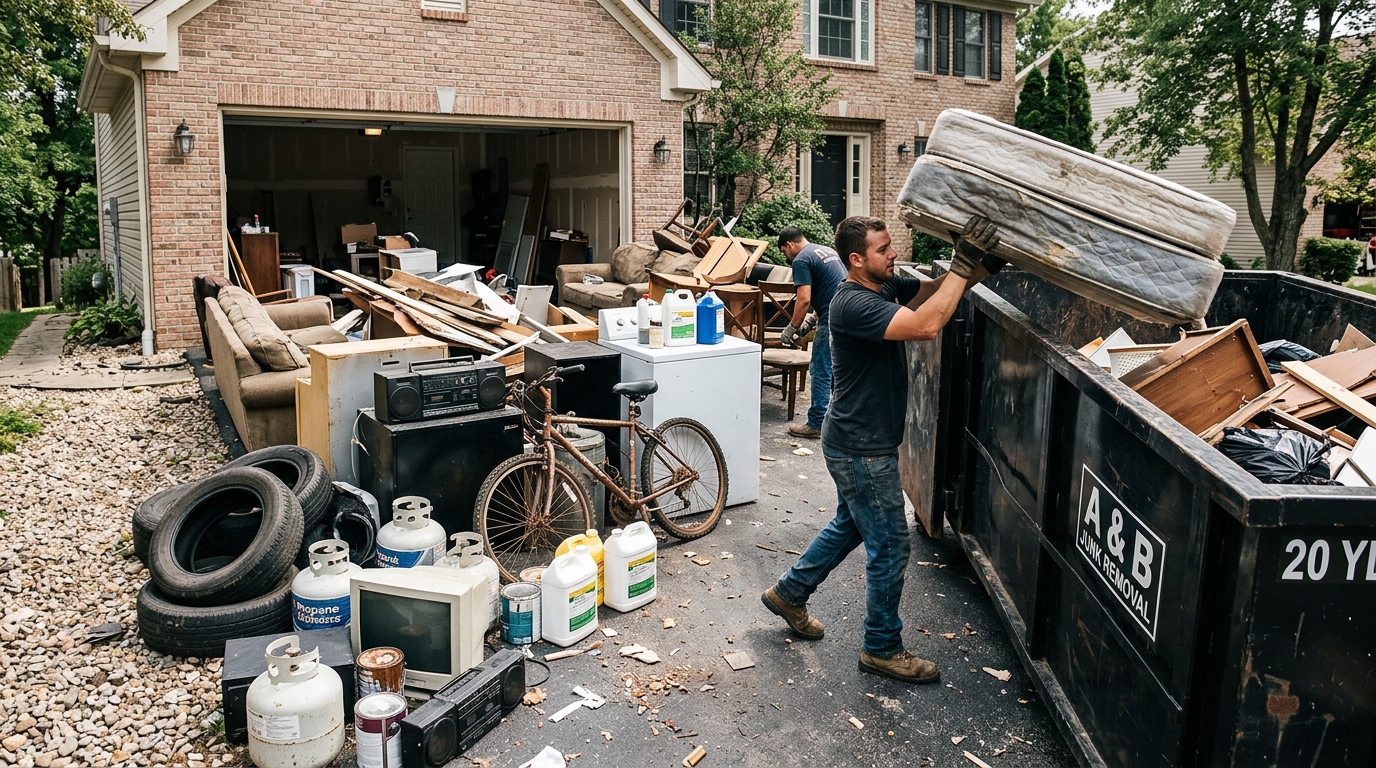
- Propane Tanks: Even "empty" tanks contain residual vapors that can explode under pressure.
- Gasoline, Oil, and Fuel: These are highly combustible and considered hazardous waste.
- Aerosol Cans: While standard hairspray might seem harmless, a bulk collection of pressurized cans is a hazard.
- Fire Extinguishers: These are pressurized vessels and must be recycled at specialized facilities.
3. E-Waste and Modern Electronics
In the digital age, electronics are a massive part of residential waste. However, most electronics contain heavy metals like lead, mercury, and cadmium. These are almost always prohibited items for residential dumpster rentals due to state-wide electronics recycling mandates.
- Televisions: Specifically older CRT monitors and plasma screens.
- Computers and Laptops: These contain valuable components that must be harvested through e-waste programs.
- Rechargeable Batteries: Lithium-ion batteries are the leading cause of fires in waste trucks today.
4. Tires and Automotive Parts
Tires are a unique problem for landfills. They don’t decompose, and their "buoyancy" caused by trapped air can actually cause them to float to the surface of a landfill over time, damaging the protective liners. Most landfills charge a significant per-tire fee, making them prohibited in standard residential rentals.
Comprehensive Comparison Table: What’s Allowed vs. What’s Prohibited
| Category | Allowed Items | Prohibited Items |
|---|---|---|
| Home Debris | Furniture, Clothes, Toys, General Trash | Asbestos-containing materials, Lead paint chips |
| Appliances | Dryers, Washers, Toasters | Refrigerators, AC Units (Anything with Freon) |
| Construction | Drywall, Wood, Flooring, Tile | Contaminated soil, Railroad ties (treated with creosote) |
| Yard Waste | Branches, Grass, Leaves | Large Stumps, Dirt (in bulk without prior notice) |
The "Gray Area" Items: Proceed with Caution
While the list of prohibited items for residential dumpster rentals seems black and white, there are several "gray area" items that require special handling or prior approval from A & B Junk Removal.
Appliances with Refrigerants
Refrigerators, freezers, and air conditioning units contain Freon (refrigerant gas). According to federal law, Freon must be professionally evacuated before the appliance can be disposed of. If you have these items, we recommend our full-service junk removal option rather than a dumpster rental, as we can ensure the proper environmental documentation is handled.
Mattresses and Box Springs
In many regions, mattresses are prohibited from landfills because they are difficult to compact and can clog machinery. Some local municipalities require mattresses to be sent to specific recycling facilities. If you are cleaning out a bedroom, ask us about current local mattress disposal policies before tossing them in the bin.
Heavy Debris (Concrete, Brick, Dirt)
While not strictly prohibited in terms of toxicity, these items are often prohibited in standard residential dumpsters due to weight limits. A standard 15-yard dumpster filled with concrete will exceed the legal road weight limit for our trucks. For these materials, we offer specialized "heavy debris" bins designed specifically for inert materials.
A & B Junk Removal’s Methodology for Safe Disposal
As leaders in the local waste management space, we follow a strict multi-step process to ensure compliance and safety for every residential rental:
- Pre-Rental Consultation: We discuss your project to identify potential prohibited items for residential dumpster rentals before the bin even arrives.
- Load Screening: Our experienced drivers perform a visual inspection upon pickup to catch restricted items, saving you from landfill rejection fees.
- Sorting and Diversion: We prioritize hauling to facilities that maximize recycling, keeping as much out of the landfill as possible.
- Specialized Handling: If you have items like e-waste or appliances, we provide separate junk removal quotes to handle those items responsibly.
How to Dispose of Prohibited Items
If you find yourself with a pile of prohibited items for residential dumpster rentals, don't panic. There are several professional ways to handle them:
- County HHW Events: Most counties host "Hazardous Household Waste" collection days once or twice a year. This is the best way to get rid of old paint, chemicals, and pesticides for free.
- Retailer Take-Back Programs: Stores like Best Buy often accept e-waste, and many auto parts stores will take old motor oil or car batteries.
- Professional Junk Removal: This is where A & B Junk Removal shines. While our dumpsters have restrictions, our full-service junk removal teams are equipped to transport certain items to the appropriate recycling or hazardous waste centers that a standard roll-off truck cannot service.
Frequently Asked Questions
What happens if I accidentally put a prohibited item in the dumpster?
If a prohibited item is found during pickup, our driver may leave the item at your curb. If it is discovered at the landfill, you will be responsible for the "contamination fee" charged by the facility, plus a handling fee for the additional labor required to process the restricted material.
Can I put upholstered furniture in a residential dumpster?
Yes, most standard upholstered furniture like sofas and chairs are perfectly acceptable. However, we recommend breaking them down if possible to save space, and always check if your specific area has a "mattress-only" restriction if the furniture includes a pull-out bed.
Why are tires and batteries so strictly regulated?
Tires create methane gas pockets and can damage landfill liners, while batteries (especially lithium and lead-acid) contain corrosive acids and heavy metals that are major fire and environmental hazards. Both require specialized recycling processes that are not available at standard municipal landfills.
Conclusion: Partner with A & B Junk Removal for a Stress-Free Cleanout
Managing a home project is stressful enough without having to worry about landfill regulations and surprise fees. By understanding the prohibited items for residential dumpster rentals, you can plan your project with confidence, ensuring a safe and cost-effective experience.
At A & B Junk Removal, we pride ourselves on being more than just a dumpster provider—we are your local waste management experts. Whether you need a roll-off container for a renovation or a full-service team to haul away hazardous e-waste, we have the solutions to keep your property clean and our community safe.
Ready to start your project? Visit us at abjunk.com to book your residential dumpster rental today or call our local team for a consultation on disposing of restricted materials.